


 25 / 32

25
CLIMATE ROUNDTABLE - TOWARDS A GREENER FUTURE
A low carbon transport system can, if managed wisely by
reducing demand and encouraging innovation, save the United
States, European Union countries, China, Japan, and India trillions.
The story for the transition away from oil is a bit more nuanced.
Our analysis shows that here, too, many nations stand to benefit,
if they manage the transition wisely. As net consumers of oil,
the United States, European Union countries, China, Japan,
and India could see huge financial benefits by transitioning to
a low-carbon economy. For them, transitioning away from oil
makes sense for reasons of self-interest and, even if they act
without net producers, they stand to benefit. Intriguingly, our
analysis also shows that if this group of countries chooses to
act, net producers would minimise their financial losses by also
reducing domestic demand for oil.
Policy should focus on reducing demand and driving innovation
to maximise the benefits and minimise the costs across net-
consuming and net-producing countries.
A key point for policymakers looking to maximise the benefits
of the transition is that policies matter. Our analysis shows
that a combination of demand reduction policies (such as
through reduced subsidies or increased taxes for fossil fuels)
and innovation provides the most promising policy approach.
Crucially, our analysis shows that restricting production without
addressing demand is an inefficient approach that creates
numerous costly distortions to the economy.
The takeaway from the analyses of the costs of transition,
both for the power and transport sectors, is clear. Countries
concerned about the financial health of their economies over
the coming decade and beyond should be looking hard at a
low-carbon transition in energy.
A shift to low-carbon power along with
reducing oil in transport could save the
global economy trillions over the next 15 years.
David Nelson,
Climate Policy Initiatve
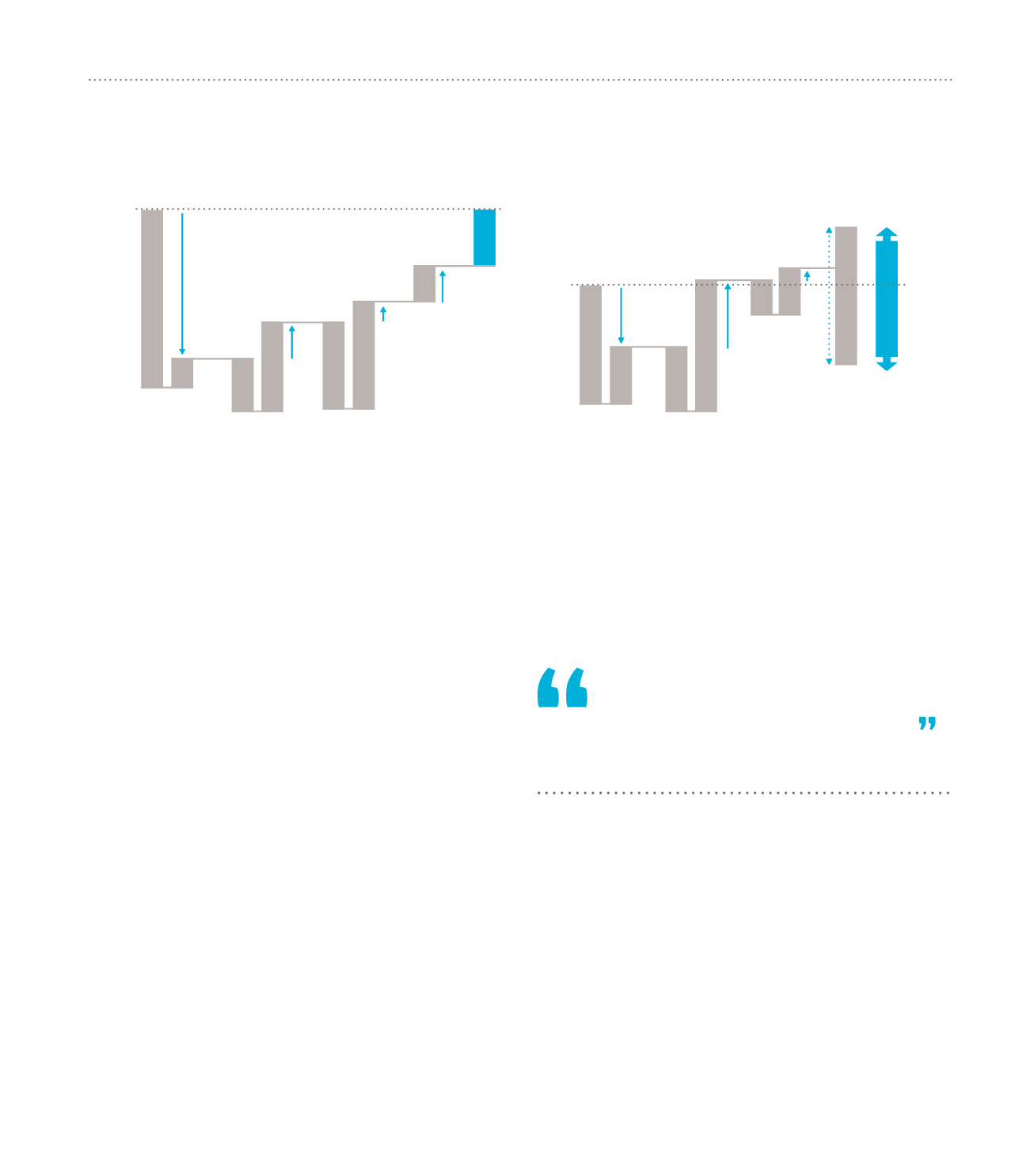
0
Operating
costs
decline $4.6 trillion
Depreciation &
amortization
increase by
$1.1 trillion
Financing
costs
increase by
$0.6 trillion
Net impact
$1.8 trillion in increased
nancial system capacity
Impact of
stranded assets
total $1.1 trillion
-1
-2
-3
-4
Fossil
Low-
Carbon
Fossil
Low-
Carbon
Fossil
Low-
Carbon
Fossil
-5
-6
-$7trn
Impact of stranded assets
ranges from $4.2 trillion bene t
to $1.8 trillion value loss
Financing
costs
increase by
$0.5 trillion
Depreciation &
amortization
increase by
$3 trillion
Operating
costs
decline
$2.8 trillion
Net impact
ranges form $2.5 trillion
cost to $3.5 trillion bene t
depending on policy
0
1
2
-1
-2
-3
-4
-5
-6
$3trn
Fossil
Low-
Carbon
Fossil
Fossil
Low-
Carbon
Fossil
Low-
Carbon